Old Harbour-Freetown among 37 priority roads under SPARK
Article By: Old Harbour News
-

- Jul 03, 2026 10:23 AM | News
-
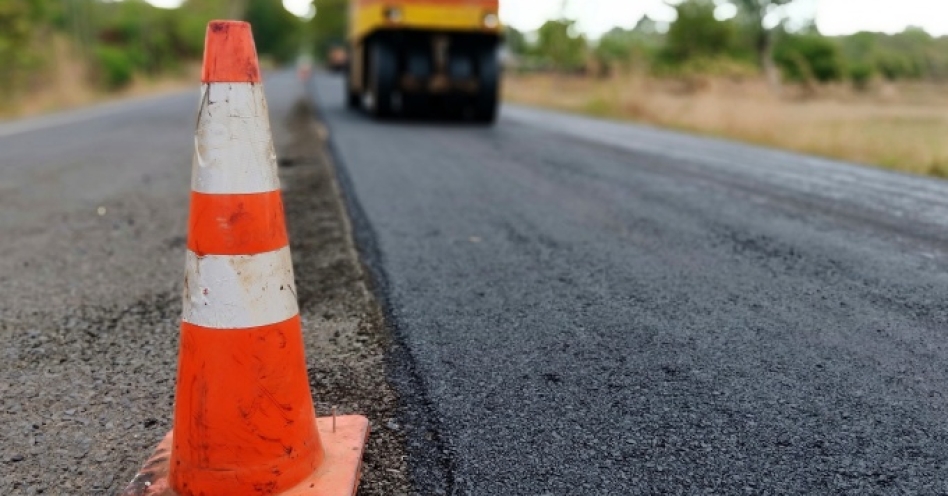
Among the roads receiving urgent attention is the Old Harbour-Freetown corridor in St. Catherine, which stands as a key artery for commuters and commercial traffic in the south-western region of the parish.
The comprehensive programme will rehabilitate 37 priority roads covering approximately 170 kilometres, directly benefiting an estimated 900,000 Jamaican citizens, according to details unveiled at the launch ceremony.
Prime Minister Dr. Andrew Holness, delivering the keynote address, emphasised that the SPARK Programme is designed not merely for cosmetic repairs but for comprehensive rehabilitation of critical infrastructure, aimed at reducing traffic congestion and catalysing increased economic activity.
"These projects are all over Jamaica... they will certainly improve traffic flow within urban centres right across Jamaica," Prime Minister Holness declared as per the Jamaica Information Service (JIS).
In the corporate area, roads slated for rehabilitation include sections of Red Hills Road (from Perkins Boulevard to Swain Spring Road), Molynes Road, Washington Boulevard, Seaward Drive-Olympic Way, and Oxford Road.
For St. Catherine, beyond the Old Harbour-Freetown corridor, works will cover sections of Braeton Road–Salt Pond Road, Gregory Park Main Road, Port Henderson Road, Spanish Town Bypass, St. Johns Road, Linstead Bypass (Bog Walk-Vanity Fair), Glengoffe-Williamsfield, and Hill Run Road .
Clarendon will see rehabilitation of Four Paths-Free Town, May Pen-Sour Sop Turn, Chapleton–Pennants, and Spalding-Cave Valley, while Manchester receives attention on Royal Flat-Caledonia Road, Greenvale-Spur Tree, and the Caines Shop to Highgate Hall stretch .
The programme extends to Trelawny (Bounty Hall-Wakefield, Troy-Warsop), St. Ann (Browns Town-Stewart Town, Claremont-Golden Grove, Priory-Bamboo), and St. Mary (Chovey-Claremont, Gayle-Guys Hill, Port Maria-Islington) .
In western Jamaica, St. James will benefit from works on Howard Cooke Boulevard-Alice Eldermire Drive and Montego Bay-Great River, with connections through Hanover and Westmoreland covering Great River-Sandy Bay, Sandy Bay-Lucea, Lucea-Green Island, Green Island-Parish Border, and the Parish Border to Negril.
Dr. Holness advised that the government has already issued work orders for 31 of the roads, with China Harbour Engineering Company (CHEC) serving as the primary contractor on the project.
"Some of them could start within a year… others may take up to a year and a half to actually see the works done, but the public should be assured that these programmes are now officially launched and in train," the prime minister stated.
However, Dr. Holness candidly acknowledged a significant challenge facing the programme: the nation's limited capacity to execute work at scale.
"One of the challenges that we are facing with the current SPARK programme is that we simply just don't have the contracting horsepower to manage all the roads all at once," he admitted .
The government is developing a policy framework to support contractors, enabling them to partner with the State in undertaking large-scale infrastructure programmes .
"We need to move away from one-man engagements on a short-term basis and operating out of their van to the contractor who is a corporate entity that is invested, with a balance sheet that can fund, finance, and carry out the works they are contracted to undertake," the prime minister explained.
Minister without Portfolio in the Ministry of Economic Growth and Job Creation with responsibility for Works, Hon. Robert Morgan, stressed that SPARK is not a patching programme but rather a comprehensive rehabilitation of Jamaica's road infrastructure .
"SPARK is a $45-billion infrastructure programme… and for the first time in Jamaica's history, over 300 community roads are now in the process of being constructed," Minister Morgan emphasised.
He underscored that SPARK roads will not simply look good upon completion; they will be properly engineered, rigorously supervised, and built to endure for generations.
"The programme must also address culverts, retaining structures, sidewalks, road markings, and other safety features required to deliver a complete road. We are not merely placing black asphalt over existing problems. We are addressing the underlying conditions that caused the roads to fail," Minister Morgan declared.
National Works Agency (NWA) Senior Director for Project Implementation, Varden Downer, explained that the roads were selected based on their potential to maximise benefits to Jamaicans by improving connectivity, reducing travel delays, enhancing access to essential services, and supporting economic growth .
"We actually selected the main roads based on a data-driven approach. So these were not based on the constituency that they exist in, but were national roads for improvement," Downer explained. "Our primary objective was to focus on connectivity and accessibility, traffic flow and mobility and safety and resilience".
The main road component represents the latest phase of the SPARK programme, which was first launched in December 2024 with a focus on community roads. With the total programme valued at $45 billion, it represents the largest investment in Jamaica's road infrastructure in the nation's history.