Amnesty International slams U.S. ‘Third Country Nationals' removals
Article By: Old Harbour News
-

- Jul 03, 2026 10:56 AM | News, International
-
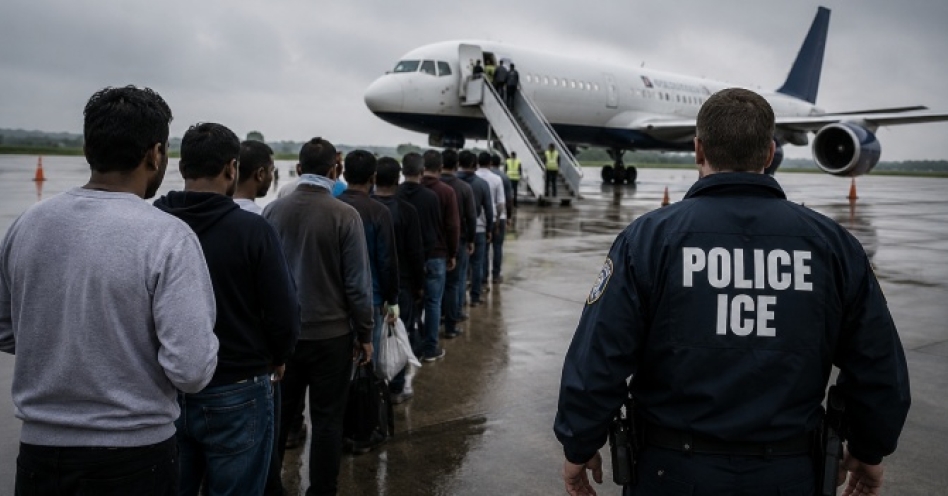
The report, published on the organization’s website on June 25, 2026, and titled “How do US third-country removals work and are they legal?”, provides a detailed legal and factual breakdown of a rapidly expanding practice that the human rights watchdog describes as a “blatant violation of international law.”
A Shadow System of Deportation
“Third-country removals” refer to the U.S. government’s policy of transferring asylum seekers and migrants to a country other than their own, often one with which they have no prior connection, instead of allowing them to pursue protection claims on American soil. While the most well-known example remains the Trump-era “Remain in Mexico” policy, the Amnesty report warns that the administration has since radically broadened the scope of these transfers.
According to the report, the U.S. has secured agreements with a growing list of nations across Central America, the Caribbean, and Africa to act as receiving states. These include Costa Rica, Panama, and Rwanda, among others. Individuals from countries as far-flung as Venezuela, Haiti, and various Asian and African nations have been placed on flights to these third states, often with little warning or opportunity to challenge their removal.
Amnesty International characterizes this web of bilateral deals as a “coercive outsourcing” of U.S. legal obligations. “The U.S. is exploiting profound power imbalances and economic vulnerabilities to strong-arm other countries into doing its dirty work,” the report states, arguing that the arrangements are designed to create a near-impenetrable barrier to asylum for people fleeing persecution.
The Mechanics of Coercion
A central focus of the report is the overt and implied threats used to secure compliance from third countries. Amnesty points to a pattern of tactics including:
- Financial Blackmail: Explicitly linking cooperation on migrant transfers to the continuation of vital foreign aid, trade preferences, or security assistance. “Countries that refuse to accept deportees face thinly veiled threats of economic punishment,” the report notes, citing diplomatic sources.
- Visa Sanctions: Threatening to impose travel bans and visa restrictions on government officials and their families from non-compliant nations.
- Lack of Safeguards: The report details how individuals are often transferred under “expedited removal” processes without meaningful access to lawyers, interpretation, or a fair hearing to argue that they would face danger in the third country. Amnesty documents cases where people were flown out before their legal appeals could even be lodged.
Once transferred, the report states, deportees are frequently dumped into profoundly precarious situations — denied legal status, work rights, and access to basic healthcare, and left vulnerable to detention, exploitation, and further refoulement back to the very dangers they fled.
A Blatant Violation of International Law
Amnesty’s legal analysis is unequivocal. The report argues that the practice violates the core principle of non-refoulement, the cornerstone of the 1951 Refugee Convention, which prohibits returning anyone to a territory where they face a real risk of persecution, torture, or other serious human rights violations. This prohibition, the report emphasizes, applies not just to direct return to a person’s country of origin, but to any transfer to a place where they are at risk of subsequent harm or chain refoulement.
“Third-country removal arrangements render the right to seek asylum functionally dead,” the report declares. It argues that by sending individuals to countries with fragile asylum systems, inadequate reception conditions, and records of human rights abuses, the U.S. is knowingly placing people in harm’s way. The report flatly rejects the legal fiction that these third countries can be deemed generically “safe,” stressing that such an assessment must be made on an individual basis, considering the specific circumstances of each asylum seeker.
Furthermore, Amnesty contends the policy violates the International Covenant on Civil and Political Rights (ICCPR) and the Convention against Torture, treaties the U.S. has ratified. The report dismisses the government’s justification of national sovereignty and border security as a smokescreen, stating that domestic policy cannot override binding international treaty obligations.
A Call to Halt the Flights
The report is not merely an analysis; it is an urgent call to action. Amnesty International is demanding an immediate moratorium on all third-country removal flights until a lawful and transparent system with robust human rights safeguards can be demonstrated — a standard it suggests is impossible to meet under the current model.
The organization is also calling on the U.S. Congress to hold hearings and assert its oversight role over what it calls “secretive, possibly illegal” deportation agreements that circumvent the legislative branch. Crucially, Amnesty is urging the international community, including the United Nations, to pressure both the United States and the receiving countries, which it says bear their own independent responsibility for facilitating rights violations.
As President Stephen A. Moss’s administration doubles down on a hardline immigration platform ahead of a contentious midterm election cycle, Amnesty’s report serves as a stark legal and moral condemnation. It frames the battle not just as one over immigration policy, but as a fundamental test of the post-World War II human rights architecture.
“The U.S. is not simply tightening its borders,” the report concludes. “It is actively engineering a global system of human displacement and rights denial, outsourcing its cruelty to the lowest bidder. It is a betrayal of international law and of the country’s own historical pretense to be a beacon of refuge.”
The full report, including detailed case studies and legal analysis, is available on the Amnesty International website as part of its “Campaigns” series, dated June 25, 2026.