Jamaica unveils blueprint to break SDG bottleneck at UN forum
Article By: Old Harbour News
-

- Jul 21, 2026 11:30 AM | Business
-
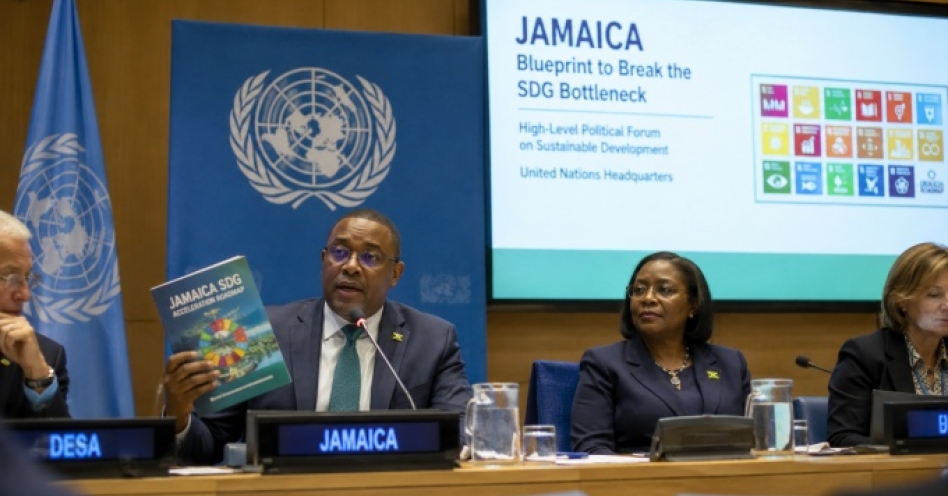
The answer, according to new research presented at a side event hosted by Jamaica's Permanent Mission to the UN, lies in a "capacity paradox" that affects countries at an intermediate stage of development — nations with enough capability to design ambitious programmes but insufficient underlying systems to implement them successfully.
The findings position Jamaica as a working model for how a middle-capacity small island developing state can accelerate progress through evidence, reform and carefully sequenced investment.
Research Reveals 'Capacity Paradox'
The data underline the urgency. Jamaica ranks 84th out of 169 countries in the Sustainable Development Report and performs above the average for small island developing states. Yet only 26 per cent of SDG indicators have been fully achieved, while 38 per cent are unchanged or worse than the 2015 baseline, according to the country's third Voluntary National Review presented at the Forum.
The research, conducted by Professor David Tennant of the University of the West Indies with funding from the United Nations, found that productive capacity — the practical abilities that enable a country to produce, diversify, innovate and turn policy into results — is a more reliable driver of overall SDG performance than export diversification or economic complexity alone.
Professor Nadine McCloud, whose analysis covered 193 countries from 2000 to 2024, explained that the priorities for Jamaica include larger investments in people and skills, deeper use of digital technology, early action on energy constraints and continued strengthening of public institutions.
SIDS-Specific Challenges Recognised
For island states, however, a global index tells only part of the story. Dr Andrzej Bolesta of UN Trade and Development presented a new version of the Productive Capacities Index designed specifically for small island developing states. It adds climate resilience and financial resilience to the standard eight categories.
Early results show relative strengths in digital connectivity, institutions, human capital and financial resilience, but weaker performance in transport and energy. The wider UNCTAD project also covers Antigua and Barbuda, the Dominican Republic, and Trinidad and Tobago, and is intended to lead to a development programme and a donors' roundtable.
Concrete Path Forward
Opening the discussion, UN Resident Coordinator Dr Dennis Zulu said the development conversation had shifted from commitment to delivery. "The question is no longer whether countries are committed to the sustainable development goals. Jamaica's commitment is not in doubt. The question is whether our institutions, our systems and our financing frameworks can convert that commitment into delivery," he said.
Minister of Labour and Social Security, Pearnel Charles Jr., noted that human capital, which scores 46 on UNCTAD's Productive Capacities Index, is a bottleneck affecting poverty reduction, health and industrial development. After unemployment reached a historic low of 3.3 percent last October, he added, the next task is to expand productive, sustainable and well-paid work.
From Diagnosis to Delivery
Closing the event, Dr Stuart Davies, Senior Economist in the UN Resident Coordinator's Office in Jamaica, set out a practical agenda for moving from diagnosis to delivery. He proposed that Jamaica could establish an SDG convergence accelerator to track which gaps are closing too slowly, identify the bottlenecks and estimate the time and action required to overcome them.
The evidence could then be translated into a ranked investment pipeline focused on high-return priorities such as skills, energy, business upgrading, digital connectivity and stronger institutions.
"We don't just need more capacity. We need the right capacity, developed in the right sequence, with institutions capable of converting good policy into measurable results," Minister Charles Jr. said.
The side event took place on the margins of the High-Level Political Forum on Sustainable Development, convened in New York from 7 to 15 July 2026 under the auspices of the UN Economic and Social Council. This year's forum met under the theme "Transformative, equitable, innovative and coordinated actions for the 2030 Agenda for Sustainable Development and its Sustainable Development Goals for a sustainable future for all."