Jamaica bought the cameras, but who decides when truth is recorded?
Article By: Dr Leo Gilling
-

- Apr 25, 2026 08:19 AM | Commentary
-
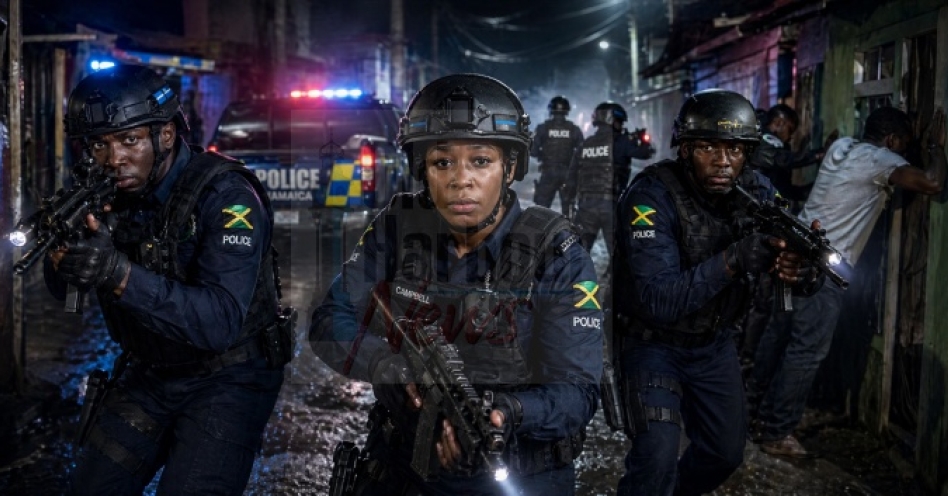
The story of body-worn cameras in Jamaica is not just about technology. It is about how a system defines accountability, and more importantly, when it chooses to apply it.
We introduced body-worn cameras nearly a decade ago. At the time, it was presented as a major step forward, a signal that Jamaica was embracing modern policing practices built on transparency, evidence, and public trust. Cameras were deployed across selected divisions, including operational units that routinely interact with the public.
The expectation was simple. These devices would capture interactions, provide evidence, support training, and strengthen accountability.
But for years, there was no clear evidence that this was happening.
There were no consistent public reports showing how the cameras were being used. There was no data demonstrating impact. There was no visible link between the existence of the cameras and improved accountability outcomes.
The devices were present, but their purpose remained unclear.
It was not until findings from the Independent Commission of Investigations began to emerge that the public started to understand the depth of the issue. INDECOM reported that although cameras had been delivered as early as 2016, their use remained limited and largely discretionary. They were described as a tactical option rather than a standard requirement.
More concerning, INDECOM indicated that it had not received any report of a recorded incident requiring action, nor any case where body-worn camera footage revealed an infraction.
That alone should have triggered national concern.
Instead, the situation became even more troubling. In 2017, INDECOM documented that in 30 planned police operations resulting in 41 deaths, no body-worn cameras were used. In another 16 fatal incidents arising from planned vehicle checkpoints, again, no cameras were deployed.
These were not spontaneous encounters. These were structured operations. These were the very moments where accountability tools should have been most active.
Their absence was not incidental. It was systemic.
Over time, explanations were offered. Officers were not trained. Stations were not equipped. The issuing officer was not present. In one fatal incident, a camera had been issued but was not turned on.
Each explanation seemed reasonable in isolation. Together, they revealed a system where accountability depended on human discretion rather than operational design.
By 2024, INDECOM rejected these explanations. It made clear that the cameras were available and could have been deployed effectively, particularly in planned operations involving specialized teams. The issue was no longer availability. The issue was use.
At that point, the national conversation shifted.
Rather than confronting the problem as one of operational failure, the focus moved to infrastructure. The argument became that without a proper technological ecosystem, including secure storage and retrieval systems for evidentiary use, the cameras could not function effectively.
This position was reinforced by Prime Minister Dr. Andrew Holness, who emphasized that the Government did not want to deploy cameras that did not work and that the system had to be capable of supporting court-ready evidence.
It was a logical explanation. It was also a reframing of the problem.
The question was no longer why cameras were not being used. The question became whether the system around them was ready.
By late 2025, that phase appeared to end. The Government announced the acquisition of over 1,000 body-worn cameras, positioning it as a major step toward strengthening accountability. By early 2026, the tone had shifted again. The cameras were described as secured, deployment was underway, and public concerns were said to be addressed.
The system, we were told, was now in place.
But then came a statement that reopens the entire issue.
Deputy Prime Minister Dr. Horace Chang made it clear that police officers would not be equipped with body-worn cameras during operations involving armed criminals. He argued that in high-risk situations, where officers are under active threat, they must focus on survival, finding cover, and responding to danger. He also stated that cameras have limited value in police shooting incidents and emphasized that decisions about who wears cameras, where, and when remain at the discretion of the police commissioner.
He further explained that cameras are most useful in situations such as road checks and public interactions, where their presence influences behavior and reduces confrontation.
At one level, this reasoning is understandable.
At another level, it fundamentally reshapes the purpose of body-worn cameras.
Because the public concern about policing is not centered on road checks. It is centered on the use of force, particularly in encounters that result in injury or death.
If cameras are used primarily in low-risk, controlled interactions, and excluded from high-risk, high-consequence operations, then their role changes.
They are no longer tools of accountability in critical moments. They become tools of compliance in routine encounters.
When you step back, a pattern becomes clear.
We made a commitment. We introduced the technology. We struggled to use it. We explained the gaps. We reframed the issue. We recommitted. We declared the problem solved. And then we defined the limits of its use in a way that reintroduces the very concerns we said were addressed.
This is not just about cameras.
It is about how systems manage accountability.
Because accountability is not defined by policy. It is defined by practice, especially in moments of consequence.
And if the system determines that those moments fall outside the scope of its accountability tools, then the question is no longer whether the system is working.
The question becomes what the system was designed to do in the first place.
The cameras are here.
The policy is here.
The commitment is here.
But if they are not used when it matters most, then accountability has conditions.
Dr. Leo Gilling is a criminologist, educator, and diaspora policy advocate. He writes The Gilling Papers, where he examines policing, public safety, governance, and community-based solutions in Jamaica and across the African diaspora. Send feedback to editorial@oldharbournews.com