Jehovah’s Witnesses relax blood transfusion ban after adherent’s death
Article By: Old Harbour News
-

- Nov 07, 2026 07:31 AM | Religion
-
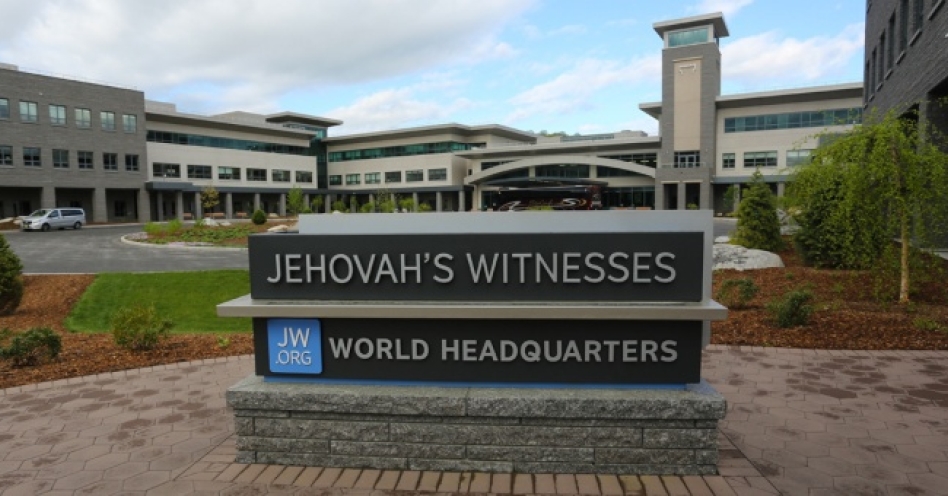
The entrance of the Jehovah's Witnesses World headquarters in New York. (Image Source: JW.ORG)
The policy change, announced just 23 days after the death of a 26-year-old American Jehovah’s Witness who declined a blood transfusion on religious grounds, has raised difficult questions about why the organisation took more than eight decades to reconsider its interpretation of biblical teachings.
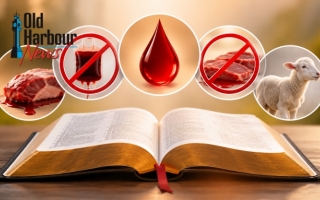
According to an extensive investigation by BBC News, the revised policy now allows individual Jehovah’s Witnesses to decide whether to accept transfusions involving blood components, including red blood cells, plasma and platelets.
However, the organisation continues to prohibit transfusions of whole blood.
Young Man’s Death Highlights Human Cost of Religious Doctrine
At the centre of the controversy is the tragic death of Isaac Valdez, a 26-year-old resident of Waxahachie, Texas, whose life ended on August 26, 2026, following complications from a severe head injury.
Isaac suffered an epileptic seizure while visiting his local library earlier that month. During the episode, he fell and struck his head against the ground, causing a brain haemorrhage.
His medical treatment was complicated by his deeply held religious convictions.
As a lifelong Jehovah’s Witness, Isaac carried a medical directive commonly referred to as a "No Blood" card, indicating his refusal to accept blood transfusions.
Although his condition initially improved and he regained consciousness sufficiently to reaffirm his religious position, his health subsequently deteriorated.
Doctors eventually advised his family that emergency brain surgery involving a blood transfusion was necessary to save his life.
His relatives, respecting his expressed wishes, declined the procedure.
Isaac subsequently slipped into a coma and died after life support was withdrawn.
His twin brother, Jacob Valdez, described him to the BBC as an intelligent and compassionate individual who enjoyed volunteering and assisting elderly people.
But what followed his death would leave Jacob questioning the very religious teachings that had influenced his brother’s medical decisions.
Just 23 days later, the Jehovah’s Witnesses’ governing body announced a significant revision to its blood transfusion policy.
Jacob believes the decision came too late for his brother.
He told the BBC that Isaac might still be alive had the revised interpretation been introduced earlier.
An 81-Year-Old Religious Teaching Reconsidered
Jehovah’s Witnesses first introduced their prohibition against blood transfusions in 1945, basing the teaching on their interpretation of biblical passages instructing believers to abstain from blood.
For decades, followers were taught that accepting transfusions involving blood violated divine commandments.
The doctrine influenced medical decisions among millions of Jehovah’s Witnesses worldwide, sometimes placing patients and their families in difficult circumstances when doctors recommended blood-based treatments.
The organisation's revised position now distinguishes between whole blood and its individual components.
Under the new interpretation, followers may personally decide whether to accept medical procedures involving donated red blood cells, plasma or platelets.
The decision represents a substantial change in how the faith approaches modern medical treatment.
Nevertheless, the organisation maintains that its fundamental biblical position on abstaining from blood remains unchanged.
Jehovah’s Witnesses Defend Policy Change
Speaking to BBC News, Paul Gillies, the international spokesperson for Jehovah’s Witnesses, explained that the revised teaching resulted from further consideration of scripture alongside developments in medical science.
"The change is basically the application of Bible principles to modern medicine and its methods," Gillies told the BBC.
He maintained that biblical references to abstaining from blood do not specifically address the individual components that modern medicine can separate from donated blood.
According to Gillies, the governing body sought to avoid extending biblical instructions beyond what scripture explicitly states.
However, the explanation has prompted critics and grieving relatives to question whether the original prohibition went beyond biblical requirements and why the distinction was not recognised decades earlier.
Jacob Valdez is among those demanding greater accountability.
He has challenged members of his late brother’s congregation over the implications of the policy change and is calling on the organisation's leadership to acknowledge the suffering experienced by affected families.
"I want to ask them if they could apologise directly, I would like not to have a deflected answer, just straightforward apology," he told BBC News.
Gillies expressed sympathy for families who have lost loved ones but did not offer the direct apology Jacob sought.
He also argued that the organisation’s previous position had protected some members from risks associated with contaminated blood supplies.
How Many Lives Were Lost?
The number of Jehovah’s Witnesses who have died after refusing blood transfusions remains difficult to establish.
According to the BBC report, research published in the medical journal Obstetrical & Gynecological Survey in 2016 estimated approximately 1,100 deaths annually associated with the refusal of blood transfusions.
However, the figure is an estimate rather than a verified worldwide death toll, and it does not establish how many patients would have survived under the revised policy.
Jehovah’s Witnesses have an estimated nine million followers globally.
The organisation also maintains that individual members may still choose to refuse transfusions, even under the revised rules.
Caribbean Woman Questions Years of Sacrifice
The BBC investigation also highlighted the emotional impact of the policy change on a Jehovah’s Witness from Trinidad and Tobago.
Elisha Cummings, 50, told the broadcaster that the former restrictions had profoundly affected her family relationships and religious life.
She recalled being unable to donate blood to her aunt, Eva, who subsequently died.
Cummings also described the breakdown of her marriage after it emerged that her husband had received a blood transfusion during childhood.
According to her account, the revelation created religious tensions, and her husband eventually left the faith and divorced her.
Now, following the policy revision, Cummings is struggling to reconcile the sacrifices she made with the organisation’s new interpretation.
"Since the blood policy change, I have not been myself," she told the BBC.
She also questioned the years she spent encouraging others to accept the former doctrine.
"How many houses did I go to trying to convince people about the blood doctrine? And you're coming now and it's something totally different," she said.
Despite her growing uncertainty, Cummings remains reluctant to leave the religion, partly because of the social isolation she fears losing her religious community could bring.
Her experience underscores the wider implications of the decision for Jehovah’s Witnesses across the Caribbean and elsewhere, where religious teachings often influence family relationships, community participation and personal medical choices.
Not All Jehovah’s Witnesses Regret Refusing Blood
While some members and former members have expressed anger and disappointment, others continue to defend their decisions to reject blood transfusions.
The BBC interviewed 58-year-old Alex Ball, a Jehovah’s Witness from West Sussex, England, who was diagnosed with blood cancer in 2012.
Ball said doctors warned him that he might not survive chemotherapy without receiving a blood transfusion.
Instead, he pursued an alternative treatment with assistance from a Jehovah’s Witness Hospital Liaison Committee.
The treatment successfully increased his blood cell levels without requiring donated blood products.
More than a decade later, Ball maintains that he would make the same decision, notwithstanding the organisation’s revised policy.
His experience illustrates the distinction between a religious prohibition and an individual’s personal decision to decline medical treatment.
Will Former Members Be Welcomed Back?
Another issue arising from the policy revision concerns individuals who previously left the faith or experienced exclusion because they accepted blood transfusions or disagreed with the organisation’s teachings.
The BBC questioned whether those individuals would now be permitted to return.
Gillies indicated that former members who wished to rejoin the organisation would be welcomed.
"Any individual that wants to come back to the faith is warmly welcomed," he said.
He encouraged those interested in returning to speak with congregation elders.
A Decision With Far-Reaching Consequences
The revised blood transfusion policy represents one of the most consequential changes to Jehovah’s Witnesses’ medical teachings in decades.
For some followers, it offers greater freedom to make personal healthcare decisions while remaining within their religious community.
For others, particularly those who have lost relatives or experienced family breakdowns connected to the previous restrictions, the announcement has reopened painful questions about religious authority, accountability and the consequences of doctrinal interpretation.
The organisation insists that the change reflects a more precise application of biblical principles rather than an abandonment of its fundamental beliefs.
Yet, for Jacob Valdez, whose twin brother died just weeks before the announcement, the distinction offers little comfort.
His brother's death has become a deeply personal example of the difficult choices faced by patients, families and medical professionals when religious convictions intersect with potentially life-saving treatment.
And while the new policy may alter the medical options available to millions of Jehovah’s Witnesses, it cannot undo the decisions made under the previous rules.
For families such as the Valdezes, the central question remains: Why did it take 81 years for the organisation to arrive at this interpretation?
Source Attribution: This article is based on original reporting and interviews conducted by BBC News concerning the Jehovah’s Witnesses’ revised blood transfusion policy, the death of Isaac Valdez and the experiences of affected members and families. Old Harbour News has independently rewritten and structured the information for its readership.
Original BBC News report: https://www.bbc.com/news/articles/cx5ynly549njo